Share The Bliss
The Homegrown Watermelon Guide: Growing, Seed Saving & Safety Checks

Share The Bliss
Hello Beautiful Friends!
There are few things that say summer quite like cutting open a homegrown watermelon! The satisfying crack as it splits open, the bright red flesh and that first sweet, juicy bite!
Every year, I save seeds from my favourite watermelon and grow them again the following season. It’s one of the easiest seeds to save, costs nothing and gives me the peace of mind of knowing exactly where my food came from.
My love for growing organic fruits and vegetables also comes from personal experience.
One of the first allergic reactions I ever experienced happened after eating watermelon while traveling overseas. During my travels, locals in a few different countries shared concerns about shady practices they had seen in some areas, including watermelons artificially coloured with red dye to make them appear ripe and also about melons grown in sewage water areas. The experience changed the way I think about food. Since then, I’ve become much more intentional about buying from trusted growers or even better, growing my own.
The good news is that the overwhelming majority of watermelons sold by reputable grocery stores, farmers’ markets, and local growers are perfectly safe. Still, I believe it’s worthwhile to know a few simple things to look for.

My Watermelon Safety Checklist
1. Inspect the Rind
Before cutting your watermelon open, take a close look at the outside.
Watch for:
– Unusual puncture marks that could suggest a needle was inserted.
– Strange cracks or damage that don’t appear to be from normal handling.
– Soft spots or bruising.
– Most marks are completely harmless, but if something doesn’t look right, I simply choose another one.
2. Look at the Colour
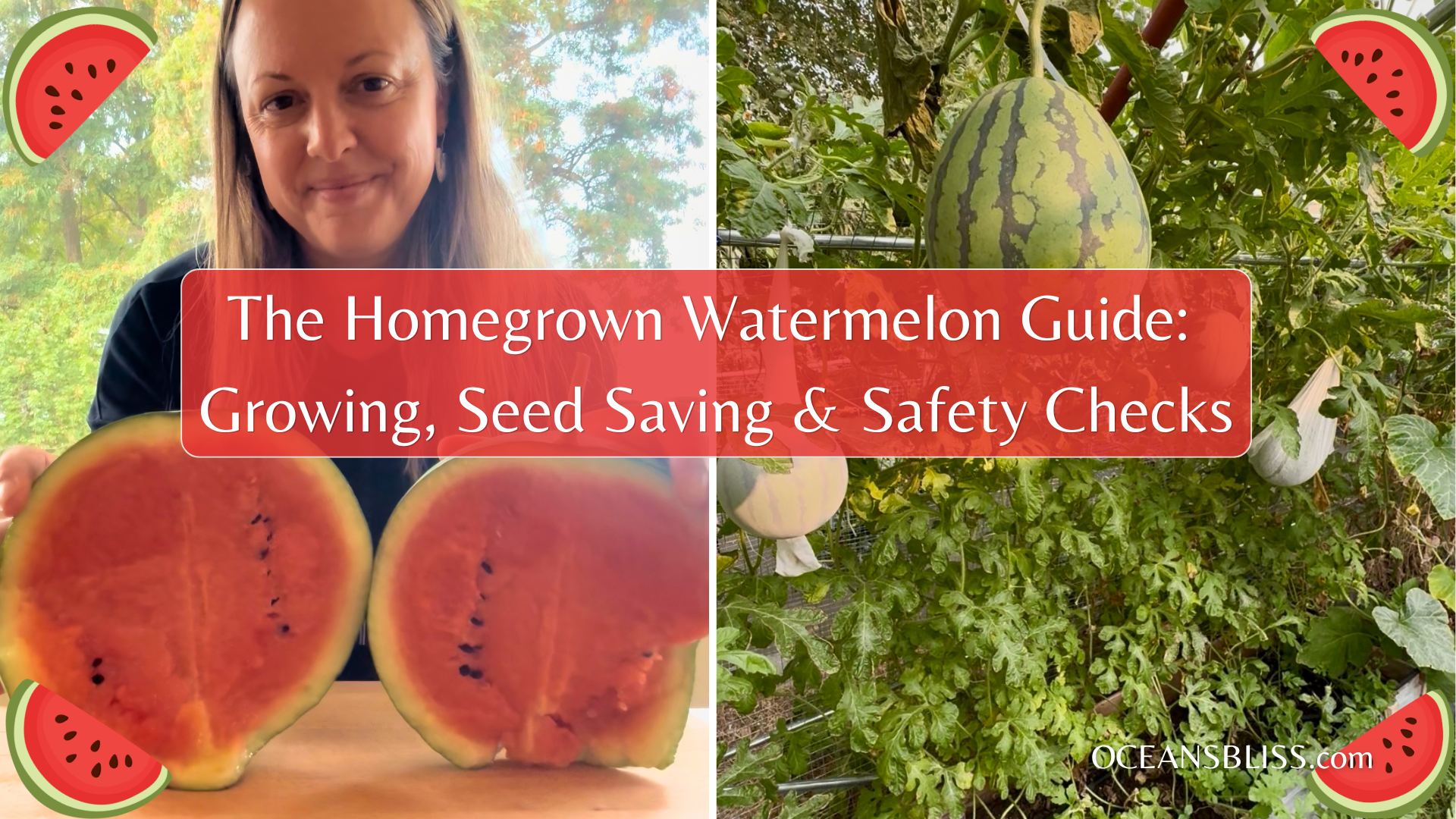
A naturally ripe watermelon usually has flesh that ranges from deep pink to a rich, natural red.
Be cautious if it appears:
– Fluorescent or neon red.
– Extremely bright and artificial-looking.
– Unevenly coloured.
Nature is beautifully vibrant but rarely unnaturally bright.
3. Try the Cotton Swab Check
If the colour seems unusual, there’s a simple check you can try. Rub a clean white tissue or cotton ball across the freshly cut flesh. A natural watermelon will usually leave behind only a faint pink, watery moisture. If it leaves an unusually intense dark red stain, it may be a sign that something isn’t right. This isn’t a definitive scientific test, but it can be one clue to inspect the fruit more carefully.
4. Feel the Texture
Fresh watermelon should be crisp, juicy, and consistent throughout.
Be cautious if you notice:
– Mushy patches beside firm areas.
– Large hollow cracks or cavities.
– Flesh that seems to be breaking down unevenly.
5. Trust Your Nose
A fresh watermelon should smell light, sweet, and refreshing. If it smells sour, fermented, chemical-like, or simply “off,” it’s best not to eat it. Our senses are often our first line of defence.

Why I Prefer Growing My Own
Growing watermelons is much easier than many people think.
All they really need is:
- Plenty of sunshine.
- Warm soil.
- Regular watering.
- Rich compost.
I grow mine vertically on a sturdy trellis to save space. As the fruit gets larger, I support each watermelon with homemade slings made from old fabric or cheescloth. It keeps the melons off the ground, improves airflow, and makes harvesting easier. Watching those tiny melons slowly grow into full-sized fruit never gets old.

Saving Your Own Seeds
Saving watermelon seeds is incredibly simple. Choose a healthy, fully ripe watermelon from an open-pollinated variety. Remove the mature black seeds, rinse away the pulp, and let them dry for about a week before storing them in a cool, dry place. Next spring, they’re ready to plant again. I love knowing that next year’s harvest begins with this year’s favourite watermelon. It’s a simple tradition that connects one season to the next and reduces the need to buy new seeds every year.
Seeded vs. Seedless Watermelons
Many people assume seedless watermelons are genetically modified, but they aren’t. Seedless watermelons are created through traditional plant breeding by crossing watermelon plants with different chromosome numbers. The result is a fruit that develops without mature seeds, although you’ll usually find the small, soft white seed coats inside. Personally, I still prefer traditional seeded varieties. Not because seedless watermelons are unsafe—but because I love saving my own seeds and growing the next generation naturally. Seeded watermelons allow me to continue that cycle year after year.

Why Organic Matters to Me
Choosing organic isn’t just about avoiding pesticides. For me, it’s about supporting healthier soil, natural growing practices, local farmers, biodiversity, and becoming a little more self-reliant. When I harvest a watermelon from my own garden, I know exactly how it was grown. I know the seed it came from. I know it ripened naturally on the vine. That connection to our food is something I never take for granted. Sometimes the sweetest watermelon isn’t the one that looks the most perfect, it’s the one you nurtured from a tiny seed and shared around your own table.
Disclaimer: The vast majority of watermelons sold by reputable growers and retailers are safe to eat. The safety checks shared in this article are practical observations rather than definitive scientific tests. Whenever possible, buy from trusted local growers or reputable retailers, and if you ever have concerns about the quality of fresh produce, it’s best to discard it and choose another.

Featured Product
‘Harvest-to-Jar’
Realistic Canning Yields: Fruits & Vegetables
Two-page downloadable guide with bonus content!