
Share The Bliss
Before Hair Serums, There Was Rosemary: Recipes for Natural Hair Care

Share The Bliss
Hello Beautiful Friends!
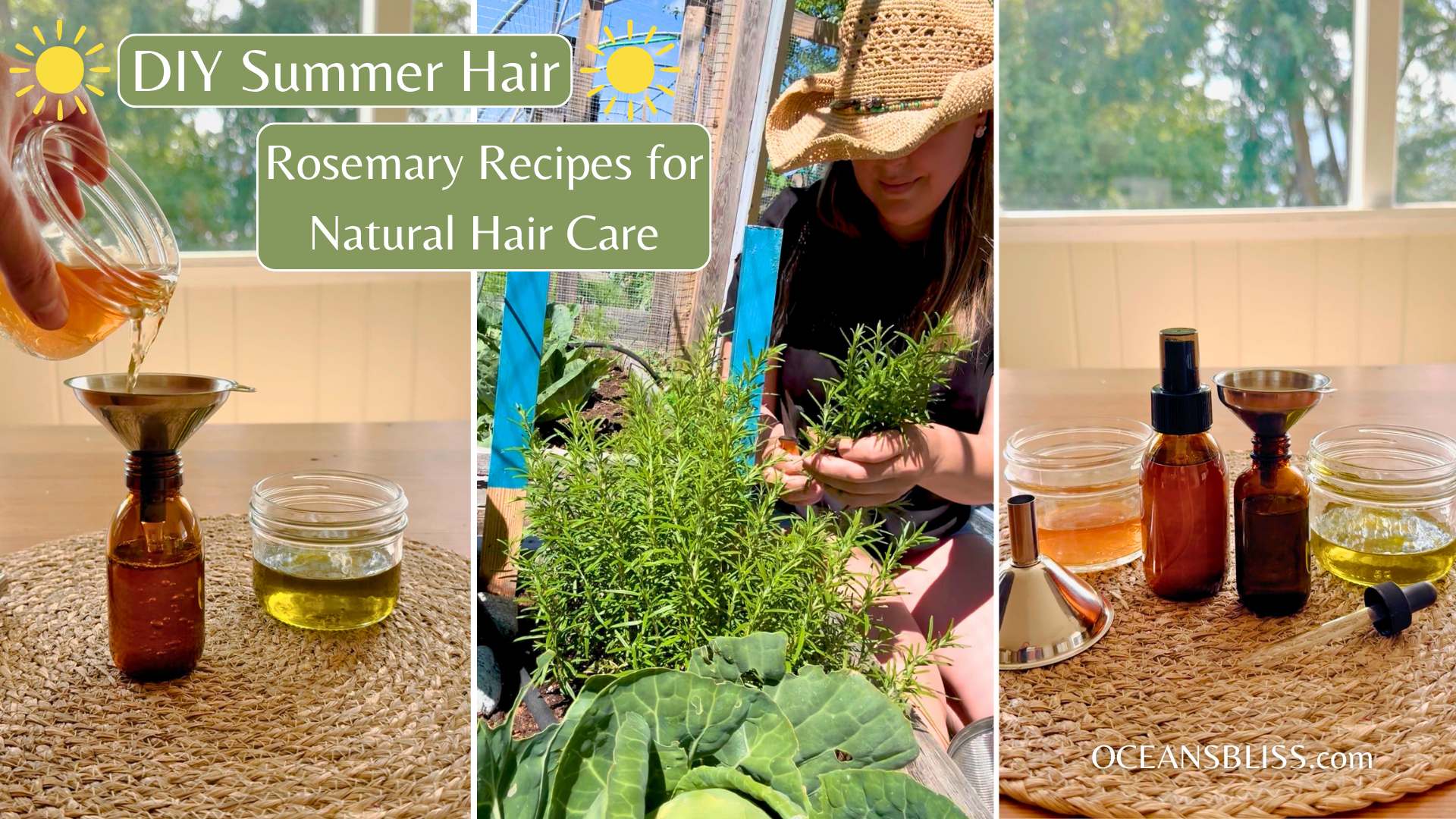
Long before specialty shampoos, expensive serums and endless hair products in big colourful plastic bottles, people turned to herbs growing in their gardens for everyday beauty care. One of the most beloved of these herbs is rosemary!
For generations, rosemary has been used to support scalp health, reduce excess hair shedding, and encourage healthy hair growth. Today, it remains one of the most popular herbs in natural hair care, and modern research has generated growing interest in its potential benefits.
If you’re looking to simplify your beauty routine, reduce unnecessary ingredients, and learn a few old-fashioned skills, rosemary is a wonderful place to start.
Why Rosemary?
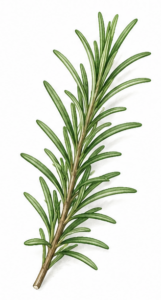
Rosemary (Salvia rosmarinus) contains compounds that may help support circulation to the scalp and create a healthy environment for hair follicles.
In recent years, research has explored rosemary’s potential role in supporting hair growth. One frequently cited study found that rosemary oil performed similarly to 2% minoxidil over several months of use, with fewer reports of scalp itching. While results vary from person to person, rosemary remains one of the most researched herbs for natural hair care.
Herbalists commonly use rosemary to:
– Support a healthy scalp
– Reduce excess hair shedding
– Encourage healthy hair growth
– Improve the appearance of thicker, fuller hair
– Help soothe dry or flaky scalps
– Add shine and vitality to hair
Like most herbal remedies, consistency matters. Results are generally measured in months rather than days.
The Beauty of Backyard Remedies
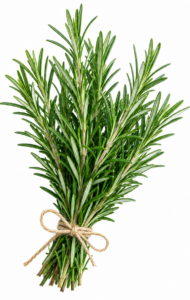
One of my favourite things about herbalism is realizing how many useful remedies can be made from plants growing right outside our doors.
Rosemary is easy to grow, drought tolerant, smells wonderful, and can be transformed into simple hair rinses, scalp treatments, oils, and herbal infusions with just a few ingredients.
Today I’m sharing two of my favourite rosemary hair care recipes: Rosemary Water and Rosemary Hair Oil.
Rosemary Water for Hair Growth
Rosemary water is one of the simplest herbal beauty recipes you can make. It’s lightweight, refreshing, and especially loved by those who prefer not to apply oils directly to their scalp. Do not let the spray go into your eyes.
Ingredients:
– 4–5 fresh rosemary sprigs
– 1/8 tsp of peppermint essential oil
– 2 cups filtered water
Instructions
– Add water and rosemary to a saucepan.
– Bring to a gentle simmer.
– Simmer for 15–20 minutes.
– Remove from heat and allow to cool completely.
– Strain out the rosemary.
– Transfer to a spray bottle or glass jar.
– Store in the refrigerator and use within 7–10 days.
How to Use Rosemary Water
– Spray directly onto the scalp once daily.
– Massage gently for 1–2 minutes.
– Leaven your scalp all day or rinse it out after 5 – 10 minutes.
– Can be applied to damp or dry hair.
Many people enjoy using rosemary water between wash days as part of their regular scalp care routine.
Homemade Rosemary Hair Oil
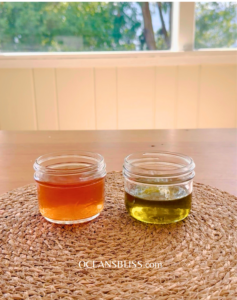
For those with dry, curly, coarse, or damaged hair, rosemary oil provides additional nourishment while delivering the benefits of rosemary directly to the scalp.Do not let the oil go into your eyes.
Ingredients:
– ¼ cup extra virgin olive oil
– 1 tsp castor oil
– Leaves from 3–4 fresh rosemary sprigs
Optional carrier oils:
– Avocado oil
– Sweet almond oil
– Jojoba oil
– Fractionated coconut oil
How to Make Rosemary Hair Oil
Step 1
– Create a double boiler by filling a small saucepan about one-quarter full with water.
– Bring the water to a gentle simmer.
Step 2
– In a heat-safe glass bowl, combine:
– ¼ cup olive oil
Step 3
– Place the bowl over the saucepan so the bottom does not touch the water.
– Keep the heat on its lowest setting.
Step 4
– Add the rosemary leaves to the warm oil.
– Allow the mixture to gently infuse for 10–12 minutes, stirring occasionally.
– You’ll notice the oil begin to take on a subtle green tint and herbal aroma.
Step 5
– Remove from heat and allow the oil to cool completely.
Step 6
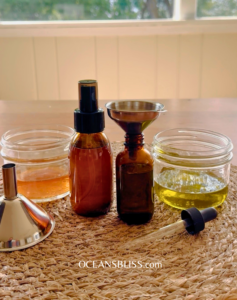
– Strain out the rosemary leaves and pour the finished oil into a clean glass bottle.
– A dark glass dropper bottle works especially well.
– The oil is now ready to use.
How to Use Rosemary Hair Oil
Weekly Scalp Treatment
– Apply a dropper full directly to your scalp, use your fingers to part the hair.
– Using your fingertips, gently massage the oil into the scalp for several minutes.
Leave on:
– At least 20–30 minutes, or
– Overnight for a deeper treatment
– Wash out with your preferred shampoo.
– Use once or twice per week.
For Dry Hair Ends
– Rub a single drop between your palms and smooth over the ends of your hair to help reduce dryness and add shine.
Which Is Better: Rosemary Water or Rosemary Oil?
The answer depends on your hair type.
Rosemary Water
Best for:
– Fine hair
– Oily scalps
Daily use
– Lightweight scalp care
– Rosemary Oil
Best for:
Dry hair
Curly hair
Damaged hair
– Deep scalp treatments
– Many people enjoy using both: rosemary water throughout the week and rosemary oil once or twice weekly as a deeper treatment.
A Few Safety Notes
- Always patch test before using a new herbal preparation.
- Discontinue use if irritation occurs.
- Avoid applying oils to broken or irritated skin.
- Natural remedies support healthy hair but are not intended to diagnose, treat, cure, or prevent medical conditions.
- Consistency is key. Most herbal approaches require regular use over several months.
Returning to Simpler Beauty
There is something incredibly satisfying about stepping into the garden, harvesting a handful of rosemary, and turning it into a beauty product with a history stretching back generations. No complicated ingredients. No mystery fragrances. No overflowing bathroom cabinet filled with bog plastic bottles of mystery ingredients!
DIY Disclaimer: This content is shared for informational, inspirational and educational purposes only. Please use appropriate safety precautions and your own judgment when attempting any project. We are not liable for any injury, damage, or loss resulting from use of this information. This guide reflects the methods I personally use in my own home.


Featured Product
‘Harvest-to-Jar’
Realistic Canning Yields: Fruits & Vegetables
Two-page downloadable guide with bonus content!