Share The Bliss
My Sweet Pea Process - A Flower That Brings Back Memories + My Growing Tips
Share The Bliss
Hello Friends!
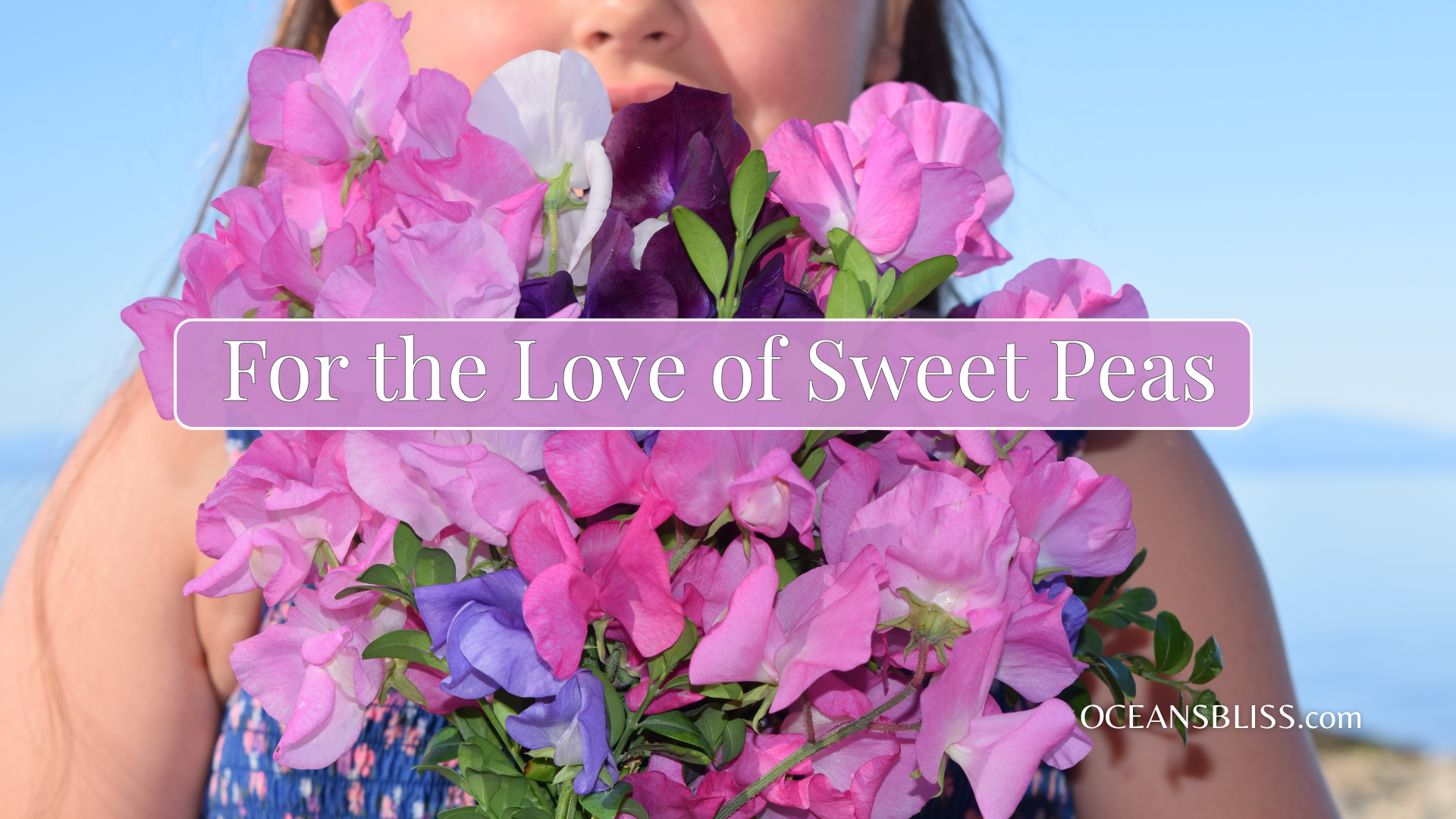
Sweet peas are my favourite flower to grow every single year. Not just because they’re beautiful, although they are. And not just because they climb and fill a little corner of the garden with colour. It’s because of the scent. Sweet peas are one of those flowers that can stop me in my tracks the second I smell them. They take me straight back to my Nanna’s garden!
I can still picture it so clearly, sweet peas climbing, that soft scent in the air, the feeling of being in the garden as a child. It’s funny how scent does that. Out of all our senses, smell is one of the strongest when it comes to memory because it’s processed in the part of the brain closely linked with emotion and memory. So when I smell sweet peas, it doesn’t just remind me of my Nanna’s garden in a vague way, it brings the feeling of it back too.
That’s exactly why I plant them every year. They’re one of those flowers that feel worth fussing over. I love cutting them and bringing them inside. I keep them on my bedside table, and I always have a bunch in my studio on my desk too. They make me so happy in the simplest way. It only takes a few stems in a jar and suddenly the whole room feels fresh and happy.
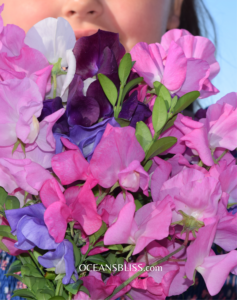
So I thought I’d share my sweet pea process, partly because I love them, and partly because they’re actually very easy to grow once you know what they like.
Why I Start Sweet Peas Indoors
I start my sweet peas from seed indoors in March. Sweet peas are a cool-season flower, which means they like to get growing while the weather is still mild. Starting them indoors gives them a head start and helps me get stronger plants ready to go out once the garden is workable in spring. By the time the weather warms up, I already have healthy little seedlings ready to climb.
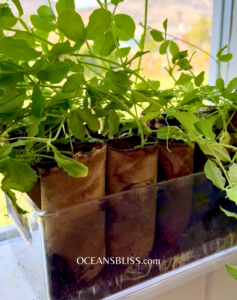
I don’t start them in regular seed trays. I use paper towel rolls, the cardboard tubes from the middle of paper towel or wrapping paper rolls cut down into sections. If you’ve grown sweet peas before, you’ll know they put down roots quickly and they don’t love being messed with too much when transplanting. Those cardboard tubes solve that problem beautifully.
My Paper Towel Roll Method
I cut the cardboard rolls into sections, usually about 4 inches tall, and stand them upright in a tray or shallow bin so they support each other. Then I fill each one with seed-starting mix, water the soil lightly, and plant one or two sweet pea seeds in each tube.
The reason I like this method so much is that sweet peas make long roots early on, and the deeper tube gives them room to grow down instead of circling in a tiny pot. It also makes transplanting really easy because I can move the whole seedling out with very little root disturbance. If the cardboard is still intact when planting time comes, I just loosen the bottom slightly or peel part of it away if needed and plant the whole thing. It’s simple, cheap, and it works.
I keep the seedlings in a bright spot and water just enough to keep the soil lightly moist, not soggy. Sweet peas don’t want to sit in wet soil, but they also don’t want to dry right out while they’re getting established.
If your sweet pea seedlings start getting too leggy indoors before it’s time to plant them out, you can give them a light trim. I snip the tops back to keep them stockier and easier to manage, and the cuttings don’t go to waste, I put them into a small glass of water and the roots will grow. so you can transplant them as well. making more sweet peas seedlings. Pinching or trimming young sweet peas can also encourage bushier growth and more side shoots, which means stronger plants once they go into the garden.
When I Transplant Them
Once the seedlings are sturdy and the garden soil is workable, I start getting them ready to move outside.
Sweet peas can handle cool weather much better than a lot of other flowers, which is one of the reasons I love them. They prefer those cooler spring conditions. But if they’ve been growing indoors, I still harden them off first. That just means gradually getting them used to outdoor conditions, sun, wind, and cooler temperatures — over about a week.
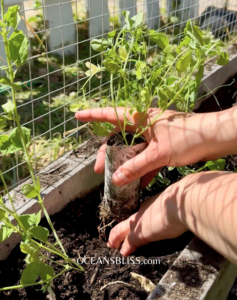
I’ll set them outside for a little while during the day, then bring them back in at night at first. After a few days, they stay out longer and get more exposure until they’re ready to live outside full time. This helps prevent transplant shock and gives them a much smoother transition. Once they’re hardened off, I transplant them into the garden at the base of a trellis.
Giving Them Something to Climb
Sweet peas are climbers, so they need support from the start. I plant mine right at the base of a trellis so they can grab on as they grow. Tendrils start reaching pretty quickly, and it’s much easier to train them early than to try and untangle them later.
If I had unlimited room, I’d probably grow a whole wall of sweet peas. Truly. I would cover every spare fence and trellis I could find. But in my garden, space is limited, and there’s also one very important issue: deer.
The deer love sweet peas as much as I do. So everything has to stay inside the protection of my greenhouse frame. That’s my compromise. I don’t have endless room for them, but I do have one safe space where I can let them climb without them becoming an overnight deer snack. My sweet peas stay tucked inside, growing up their trellis where I can still enjoy them and actually get the flowers before the wildlife does.
A Few Sweet Pea Growing Tips That Help
Over the years, a few things have made the biggest difference for me with sweet peas:
- Start them early. They perform best when they can grow in cool weather rather than trying to push through summer heat from the very beginning.
- Use deep seed containers. Sweet peas make roots fast, so deeper tubes or pots are much better than shallow trays.
- Harden them off before transplanting. Even though they’re hardy, indoor-grown seedlings still need a gradual transition.
- Give them a trellis right away. They’ll climb quickly and are much happier with support from the start.
- Cut them often. The more you pick sweet peas, the more they tend to keep flowering.
- Keep them protected if deer are around. Learned that one the hard way.
Why I’ll Always Grow Them
There are plenty of flowers I love, but sweet peas will always have a permanent place in my garden.
They’re not just pretty to me. They’re familiar. They’re comforting. They’re memory, scent, and gardening all wrapped into one plant. Every spring when I tuck those seeds into their cardboard tubes, I already know what’s coming later, bunches on the bedside table, stems in little jars around the house, that scent drifting through my studio, and the feeling of being pulled right back into my Nanna’s garden for a moment. That’s the magic of sweet peas for me.
They’re a flower, yes. But they’re also a way of keeping a memory close.
With Bliss xo
Disclaimer: This post is based on my own gardening experience and is intended for general informational purposes only. Growing methods and results may vary depending on your climate, soil, and garden conditions.

Featured Product
‘Harvest-to-Jar’
Realistic Canning Yields: Fruits & Vegetables
Two-page downloadable guide with bonus content!