Share The Bliss
Super Simple DIY Dishwasher Tabs (That Actually Work)

Share The Bliss
Hello Beautiful Friends!
There’s something deeply satisfying about making your own cleaning staples, especially when they’re simple, effective, and free from all the extra fillers.
These DIY dishwasher tabs are one of those small swaps that feel good in every way: cleaner ingredients, less waste, and a little more self-sufficiency in your home rhythm. And the best part? You can customize them based on your water type, which is often the missing piece when homemade dishwasher detergents don’t perform as expected.
Affiliate Disclosure: This post contains affiliate links. I may earn a small commission from qualifying purchases at no extra cost to you. As an Amazon Associate I earn from qualifying purchases. Click the highlighted links to shop my pick!
The Base Recipe
Ingredients:
– 1 cup washing soda (sodium carbonate). A powerful natural cleaner that cuts grease and softens water.
– 1 cup baking soda. Helps lift residue, neutralize odours, and gently scrub.
– 3/4 cup kosher salt. Improves cleaning performance and helps prevent spotting.
– 3/4 cup lemon juice or 2–3 tablespoons citric acid. Adds acidity to break down mineral deposits and prevent cloudy glassware.
Tools:
– Glass Storage Container
– Silicone molds
Instructions:
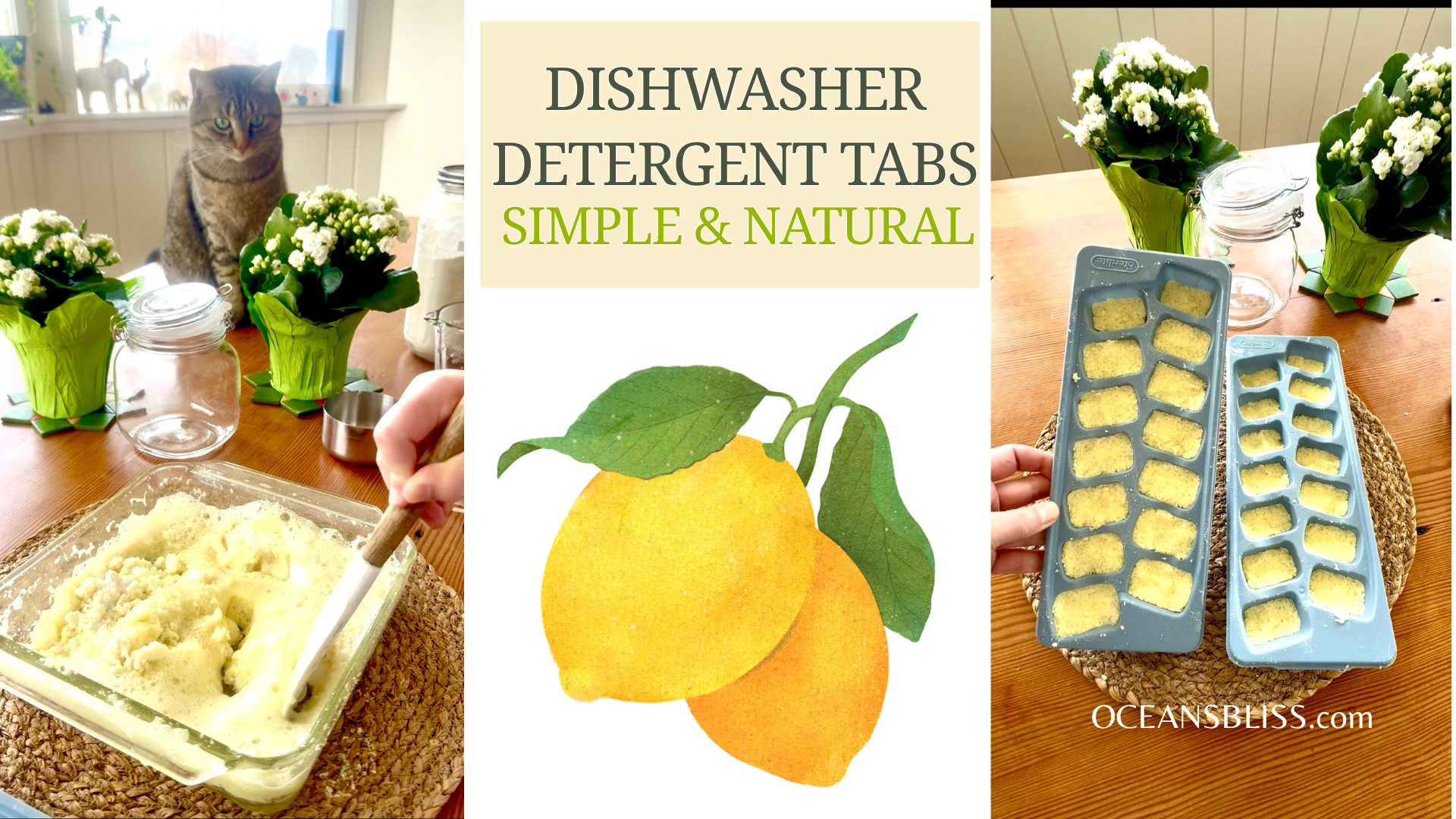
- Mix dry ingredients in a large bowl until evenly combined.
- Slowly add lemon juice (or a small amount of water if using citric acid), stirring as you go. It may fizz—this is normal.
- Press firmly into molds (about 1 tablespoon per tab). Silicone molds or ice cube trays work well.
- Let dry for 12–24 hours until fully hardened.
- Pop out and store in an airtight container.
- Use 1–2 tabs per load, depending on your water and how full your dishwasher is.
Understanding Your Water (This Changes Everything)
If you’ve ever tried a DIY detergent and thought “this doesn’t work”, it’s usually not the recipe… it’s the water.
Hard Water (common in many rural and mineral-rich areas)
You’ll notice:
- Cloudy glassware
- White residue or film
- Dishes that don’t feel fully clean
What to do:
Increase citric acid (or use it instead of lemon juice entirely)
Keep or slightly increase salt
Always use a rinse aid (white vinegar, if your machine allows it)
Citric acid is especially helpful here—it binds to minerals like calcium and magnesium so they don’t stick to your dishes.
Soft Water
You’ll notice:
- Dishes clean easily
- Sometimes a slippery or filmy feeling
What to do:
Reduce salt slightly
Use less detergent (often just 1 tab is enough)
Skip extra acidity unless you’re noticing spots
Too many softening agents in already soft water can actually leave residue behind.
Well Water (or inconsistent water)
This can be a mix of both worlds and may change seasonally.
What to do:
Start with the base recipe
Adjust gradually:
More spotting → add citric acid
Film or residue → reduce salt or baking soda
Expect a bit of trial and adjustment—it’s normal
Ingredient Variations (And When to Use Them)
1. Citric Acid (Highly Recommended Option)
If you want more consistency, this is the upgrade.
Why use it:
Stronger and more stable than lemon juice
Extends shelf life (no moisture = no premature reaction)
Better for hard water
How to use:
Replace lemon juice with 2–3 tablespoons citric acid
Add a small amount of water just to bind the mixture
2. Epsom Salt (Magnesium Sulfate)
This one is more nuanced.
Why use it:
Can help reduce mineral buildup in certain water conditions
Adds a slight polishing effect
But here’s the truth:
Epsom salt doesn’t soften water the same way sodium-based salts do. In some cases (especially very hard water), it can actually contribute to residue.
Best use:
Try replacing a portion of kosher salt (not all)
Works better in moderate or balanced water, not extreme hard water
3. Lemon Juice (The Classic)
A beautiful, natural option—especially if you’re keeping things simple.
Best for:
Light to moderate water hardness
Fresh batches (since moisture shortens shelf life)
Extra Tips for Best Results
Rinse Aid:
White vinegar works beautifully for many people, leaving dishes sparkling.
However, always check your dishwasher manual—some manufacturers advise against it as it may affect seals over time.
Essential Oils (Optional):
Add 15–20 drops of lemon or tea tree oil for scent and mild antibacterial properties.
Storage Matters:
Keep tabs in a dry, airtight container. Moisture in the air can soften them over time. Clearly label your container and store it in a secure place, safely out of reach of children.
Less is More:
Homemade detergents are concentrated—using too much can lead to residue.
A Note on Expectations
Homemade dishwasher tabs don’t behave exactly like commercial ones and that’s okay. Most store-bought detergents contain synthetic surfactants, enzymes, and anti-caking agents designed for uniform results in all conditions.
What you’re creating here is something different that’s rooted in traditional, no-tox living.
Once you dial in your water and your ratios, the results can be just as satisfying—if not more.
Short on Time or Don’t Want to DIY?
These dishwasher pods are a great price and 50 tabs here’s the link
DIY Disclaimer: This content is shared for informational, inspirational and educational purposes only. Please use appropriate safety precautions and your own judgment when attempting any project. This guide reflects the methods I personally use in my own home.

Featured Product
‘Harvest-to-Jar’
Realistic Canning Yields: Fruits & Vegetables
Two-page downloadable guide with bonus content!