Share The Bliss
Wild Violet Syrup: A Little Bit of Spring Magic in a Jar
Share The Bliss
Hello Beautiful Friends!
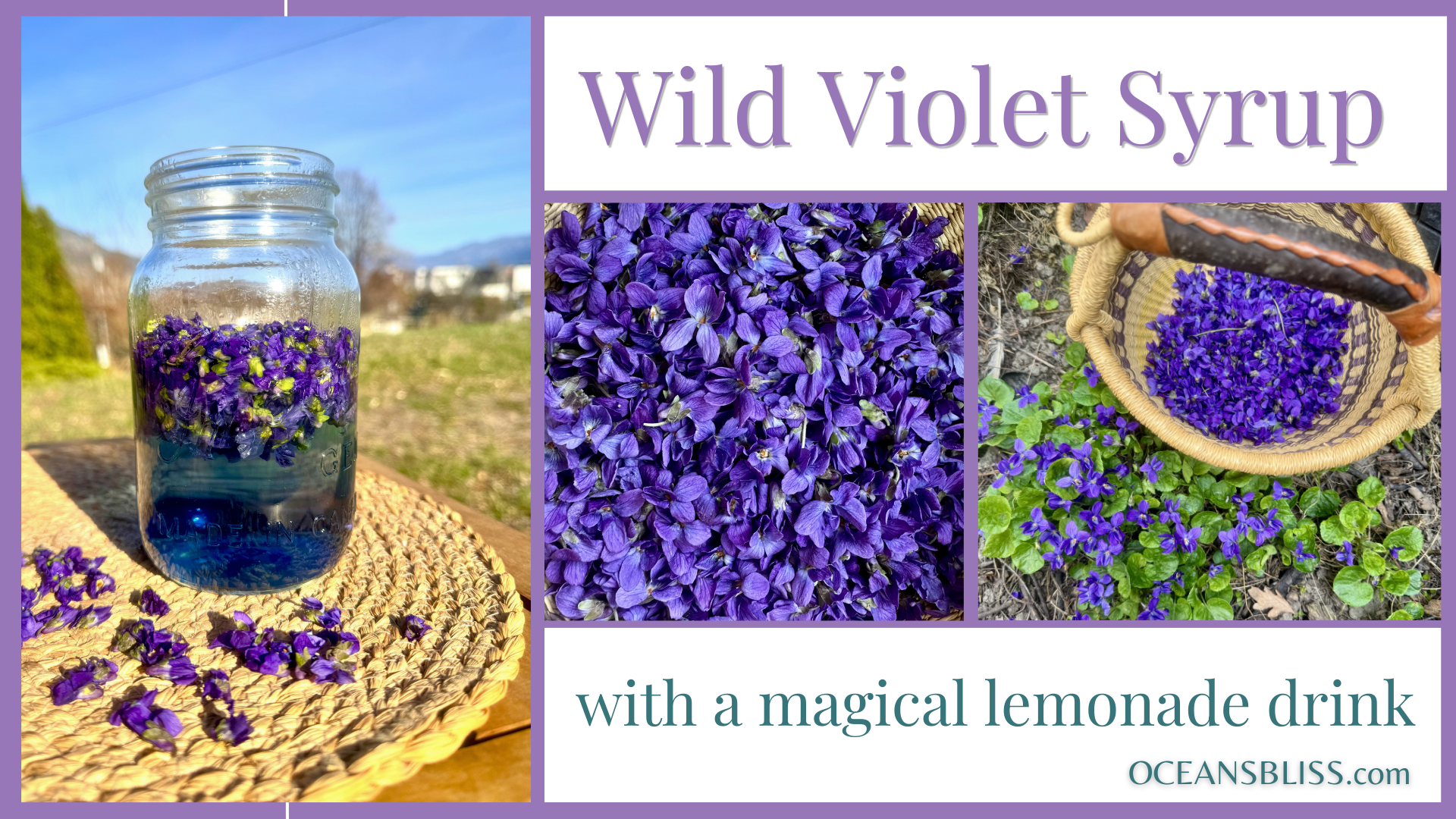
There’s a short window each spring when the ground wakes up and offers one of its most delicate gifts….wild violets. You’ll find them tucked low in the grass, shady areas, they seem to be very shy!
Welcome to Oceans Bliss Portal! Foraging violets feels a bit like stepping into an older way of living… with the seasons, and using what nature gives us for free! (Small Wins!!)
A Few Fun Facts About Wild Violets
Wild violets aren’t just pretty, they’ve been used for generations in both food and herbal traditions.
🌿 They’re completely edible, flowers and leaves alike
💜 Rich in vitamin C, traditionally used to support the immune system
🍯 Historically used in syrups for soothing throats and coughs
🐝 Early pollinator food, one of the first spring blooms for bees
And here’s something most people don’t realize…
Violets are part of a group of plants that are incredibly sensitive to pH…which means they react to acidity in a visible, almost magical way.
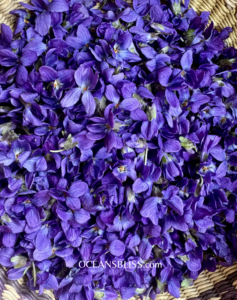
The Colour Magic (This Is the Fun Part)
When you first pour hot water over violet petals, you’ll get a deep blue or purple infusion. But the moment you add lemon juice… It transforms.
That rich blue shifts into a vibrant pink or magenta right before your eyes. This happens because of natural plant pigments called anthocyanins, they act like tiny pH indicators:
- Blue/purple = neutral or slightly alkaline
- Pink = acidic (once lemon is added)
It’s the same kind of natural chemistry that gives red cabbage its colour-changing abilities, but with violets, it feels softer, more whimsical… like a kitchen spell.
Wild Violet Syrup Recipe
A simple way to preserve spring for later days.
You’ll need:
- 1 cup fresh wild violet flowers (no stems, lightly rinsed)
- 1 cup boiling water (filtered)
- 1 cup organic cane sugar (or honey for a deeper flavour)
- 1–2 tbsp fresh lemon juice
Step 1: Make the infusion
Place the violets in a glass jar and pour boiling water over them. Cover and let steep overnight.
By morning, the liquid will be a deep blue-purple.
Step 2: Strain
Strain out the flowers using a fine mesh or cheesecloth.
Step 3: Add sweetness
Pour the liquid into a saucepan, add cane sugar, and gently warm until dissolved.
Step 5: Bottle it up
Pour into a clean glass jar or bottle and store in the fridge.
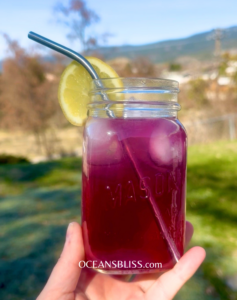
Violet Lemonade (A Spring Ritual Worth Keeping)
This is where your syrup really shines.
You’ll need:
- 2–3 tbsp violet syrup
- Juice of 1/2 lemon
- 1 cup cold water (or sparkling water)
- Ice
To make:
Stir everything together in a glass over ice.
For a layered look, pour the syrup in last and watch it swirl through the lemonade in soft pink ribbons.
A Few Ways to Use Violet Syrup
- Drizzle into herbal teas
- Add to sparkling water for a floral soda
- Pour over pancakes or yogurt
- Mix into cocktails or mocktails
- Brush onto cakes for a subtle floral glaze
A Foraging Reminder:
Only pick from areas you trust, away from roadsides, sprayed lawns, or high-traffic areas. And always leave plenty behind.
The beauty of foraging is not just in what we take—but in how we learn to notice, respect, and return.
There’s something special about turning a handful of tiny flowers into something you can taste weeks later. It’s simple, a little old-fashioned, and quietly magical.
A reminder that even the smallest things in nature carry wonder—if you know where (and when) to look.
Before picking wild violets (or anything), make sure you’re 100% certain of what you’re harvesting. Nature doesn’t label plants, and some can look similar at a glance.
How to spot true wild violets:
💜 5 petals (2 up, 2 sides, 1 down)
🌿 Heart-shaped leaves
🌱 Low to the ground, spreading in clusters
✨ No milky sap
A good rule to follow:
Match at least 3–5 characteristics before harvesting.
When in doubt—leave it. There’s always more to learn next walk.
DIY Disclaimer: This content is shared for informational, inspirational and educational purposes only. Please use appropriate safety precautions and your own judgment when attempting any project. This guide reflects the methods I personally use in my own home.

Featured Product
‘Harvest-to-Jar’
Realistic Canning Yields: Fruits & Vegetables
Two-page downloadable guide with bonus content!