Share The Bliss
Goldenrod Season: Foraging, Drying + 5 Ways to Use It
Share The Bliss
Hello Beautiful Friends!
Goldenrod always feels like one of the first signs that summer is beginning to wind down. Those tall sprays of yellow start appearing along fields, trails and roadsides in late summer, just as the garden begins shifting toward fall. It’s also one of those plants that reminds me how much we can gather and make ourselves.
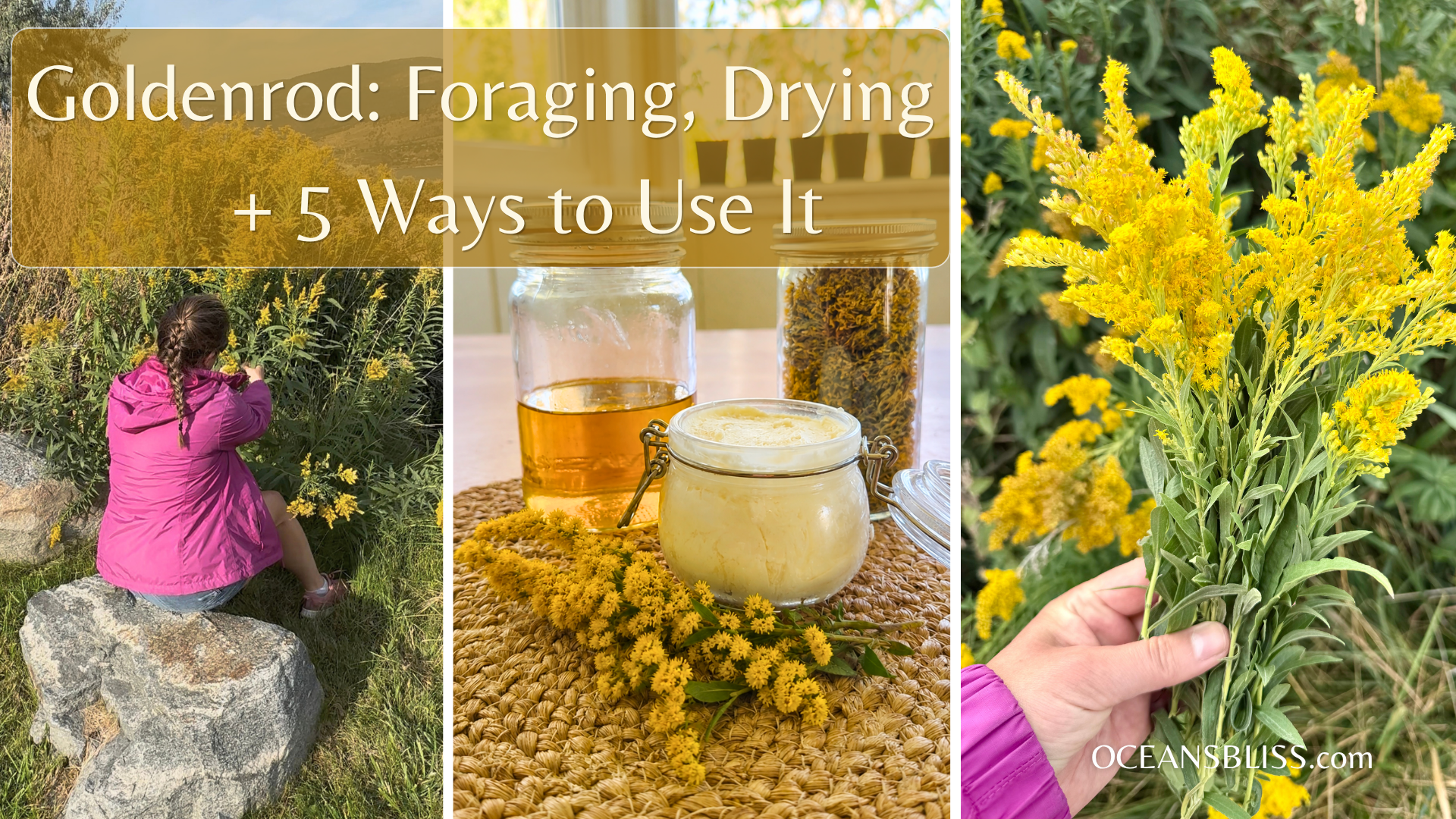
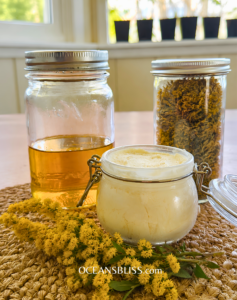
I love harvesting goldenrod to dry for tea and infuse into oil, which becomes the base for simple salves and creams throughout the year. A jar of dried goldenrod and a bottle of goldenrod oil in the apothecary can go a surprisingly long way.
Foraging Goldenrod
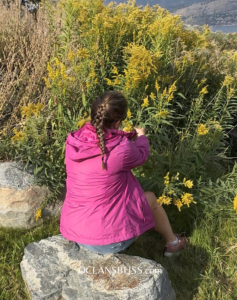
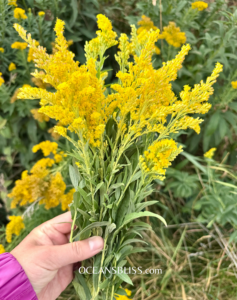
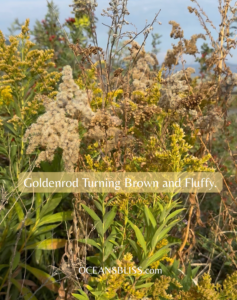
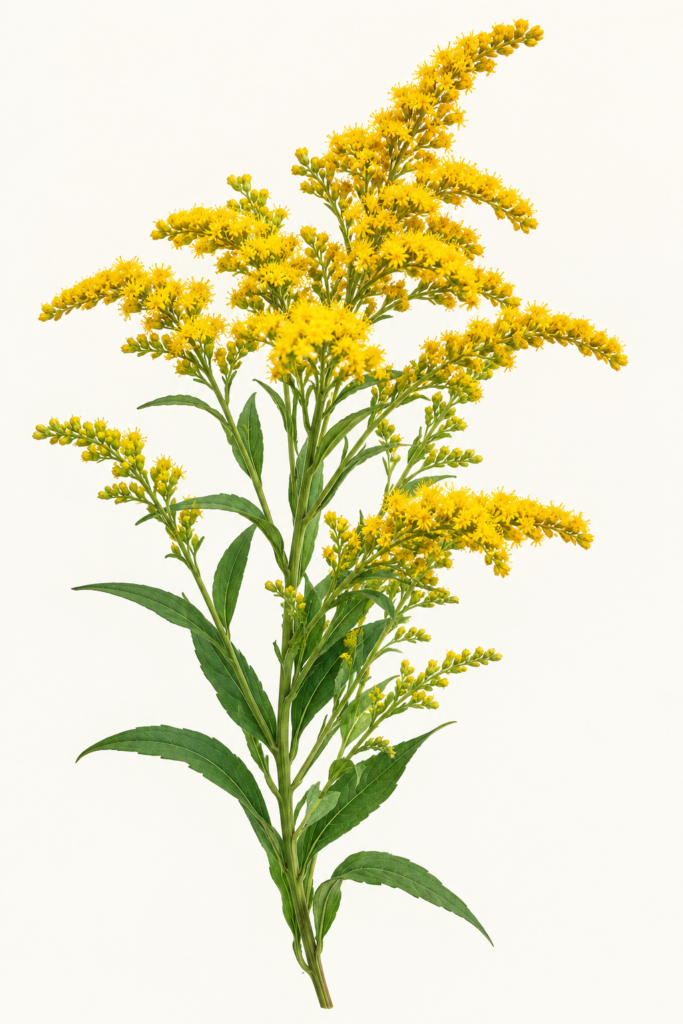
Goldenrod (Solidago species) grows throughout much of North America. Canada goldenrod (Solidago canadensis) is widespread across Canada and commonly grows in open fields, meadows, along fence lines and roadsides. It generally flowers from July through September. I like to harvest when the flowers are freshly opened and bright yellow, before they begin turning brown or fluffy. Snip the flowering tops and some of the upper leaves, leaving plenty behind for bees, butterflies and other pollinators.
As with anything wild, never harvest a plant unless you are completely certain of its identification. Choose clean areas away from sprayed fields, busy roads and contaminated ground, and only gather where you have permission…no need to get chased off somebody’s land today! :)
5 Simple Ways to Use Goldenrod
1. Goldenrod Tea
This is probably the simplest way to preserve goldenrod. Dry the flowering tops and leaves completely, then store them in an airtight jar somewhere cool and dark.
To make:
– Steep about 1–2 teaspoons of dried goldenrod in 1 cup of hot water for 10–15 minutes, then strain.
Goldenrod has a long history of traditional herbal use, particularly for the urinary tract. The European Medicines Agency recognizes preparations of goldenrod for traditional use in minor urinary complaints to help increase urine production and flush the urinary tract.
2. Goldenrod Infused Oil
This is the goldenrod preparation I use the most because once the oil is made, it can become the base for so many homemade body products.
To make:
– Fill a clean jar about halfway with fully dried goldenrod flowers and leaves. Cover completely with olive, sunflower, jojoba or another skin-friendly carrier oil.
– Let it infuse for about 4–6 weeks in a dark cupboard, shaking occasionally. Strain well and store the finished oil somewhere cool and dark.
– For a quicker method, gently warm the herbs and oil using very low indirect heat for a few hours, making sure you don’t fry the plant material.
3. Goldenrod Salve
Once you have infused oil, making a basic salve is incredibly simple.
You need:
– 1/2 cup goldenrod-infused oil
– About 1 tablespoon beeswax
– Gently melt together, pour into a clean jar or tin and allow it to cool.
I like keeping herbal salves around for hardworking hands and dry, weather-exposed skin—especially after months spent gardening, harvesting and working outside.
4. Goldenrod Skin Cream
Goldenrod oil can also replace the plain carrier oil in your favourite homemade cream or body butter recipe.
For the simplest version, whip a small amount of goldenrod-infused oil into shea butter until you reach a consistency you like.
It makes a beautiful late-summer seasonal cream for hands, elbows and other dry areas.
5. Goldenrod Herbal Soak
Sometimes the easiest herbal remedies are the ones that require almost no preparation.
Place a handful of dried goldenrod into a muslin bag or reusable tea bag and add it to a warm bath or foot soak. Let it steep in the hot water for several minutes before soaking. It’s a lovely way to use the flowers that don’t make it into your tea or oil jars.
A Little Bit of Summer Put Away
For me, learning to identify and use plants like goldenrod isn’t about replacing modern medicine or having a remedy for absolutely everything.
It’s about knowing what grows around us.
A few hours spent gathering and drying herbs in late summer can leave you with teas, infused oils and ingredients for simple home products all winter long. It’s another small piece of self-sufficiency learning traditional skills, wasting less and knowing how to make a few useful things for your family with your own hands.
And I really love that.
Goldenrod blooming may mean summer is coming to an end, but a few jars tucked away on the shelf mean we get to carry a little piece of it with us into the seasons ahead.
A quick herbal safety note: Goldenrod is in the Asteraceae family, so people with allergies to plants in this family should use caution. The EMA specifically lists hypersensitivity to Asteraceae as a contraindication for medicinal goldenrod preparations. Herbal preparations aren’t appropriate for everyone, particularly during pregnancy, breastfeeding, for children, or alongside certain health conditions or medications, so check with a qualified healthcare professional when appropriate.
DIY Disclaimer: This content is shared for informational, inspirational and educational purposes only.Please use appropriate safety precautions and your own judgment when attempting any project. We are not liable for any injury, damage, or loss resulting from use of this information. This guide reflects the methods I personally use in my own home.

Featured Product
‘Harvest-to-Jar’
Realistic Canning Yields: Fruits & Vegetables
Two-page downloadable guide with bonus content!